

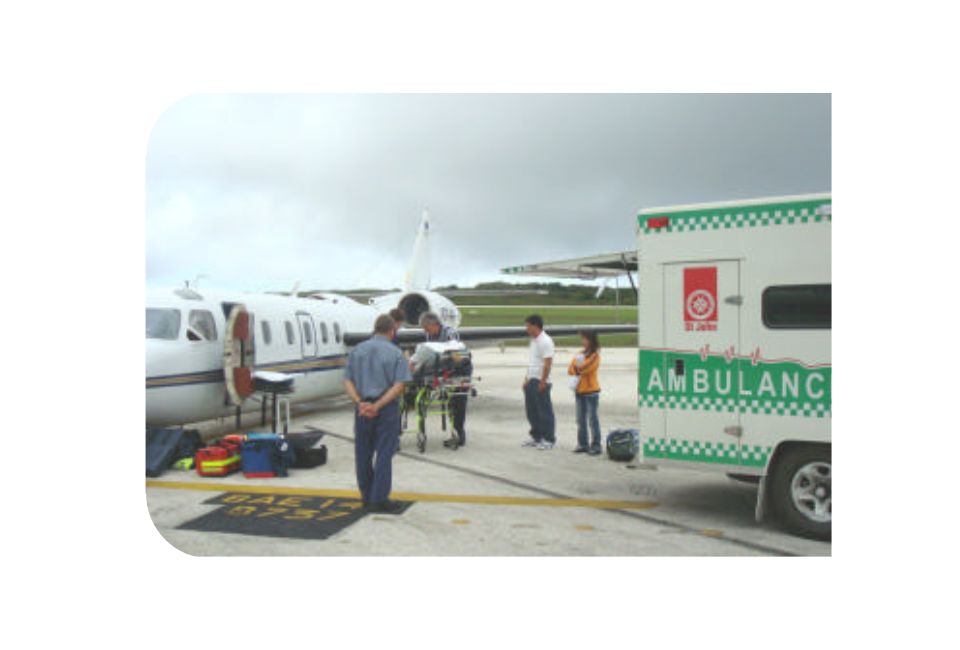
2006: Humble beginnings
In 2006 the CareFlight team in Darwin strikes an agreement with local-ready partners to deliver a rapidly available international and domestic emergency medevac jet service, ushering in a new generation of aeromedical capability for the NT.
Patients include Australians holidaying or serving with Defence forces, corporate staff on overseas postings and foreign nationals needing specialised aeromedical retrieval services that were unavailable locally.
Medevac missions started to increase and diversify. The team didn’t know it yet, but this collaboration would soon become a lifeline for thousands.
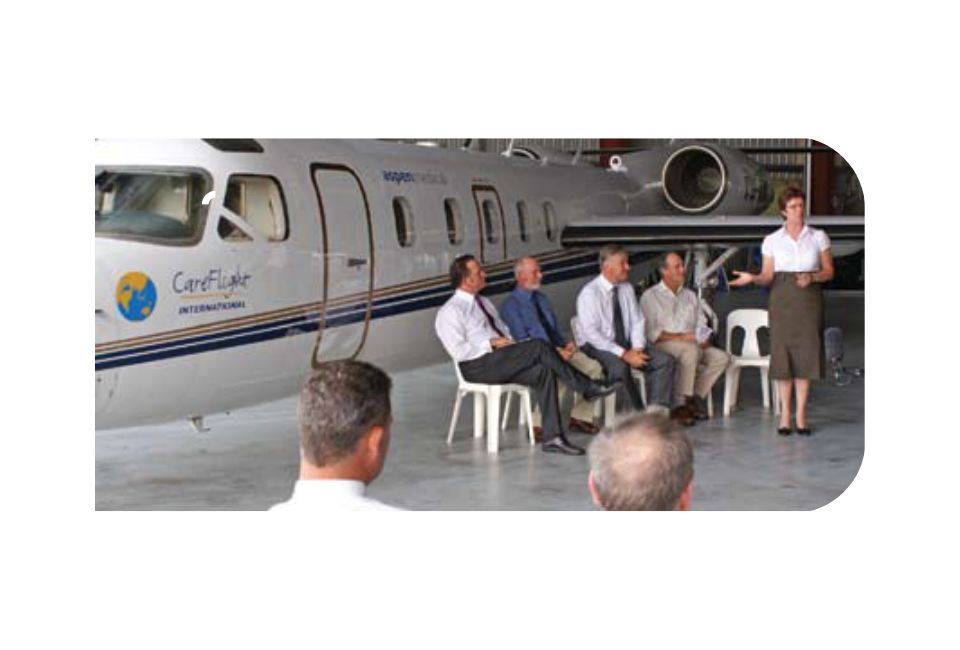
2007: A permanent home in the Top End
February 2007 brought the first mission from CareFlight’s permanent Darwin base – a critically injured car crash survivor who needed to be transported for specialist care more than 3,000 km away in Brisbane.
A month later, CareFlight holds an event and officially launches the first dedicated aeromedical jet to be based in Darwin, with NT Chief Minister the Hon Clare Martin officiating.
That same year, CareFlight began helicopter services supporting ADF exercises at the Mt Bundey Training Range and earned CASA approval to fly at night with newly adopted night‑vision technology.
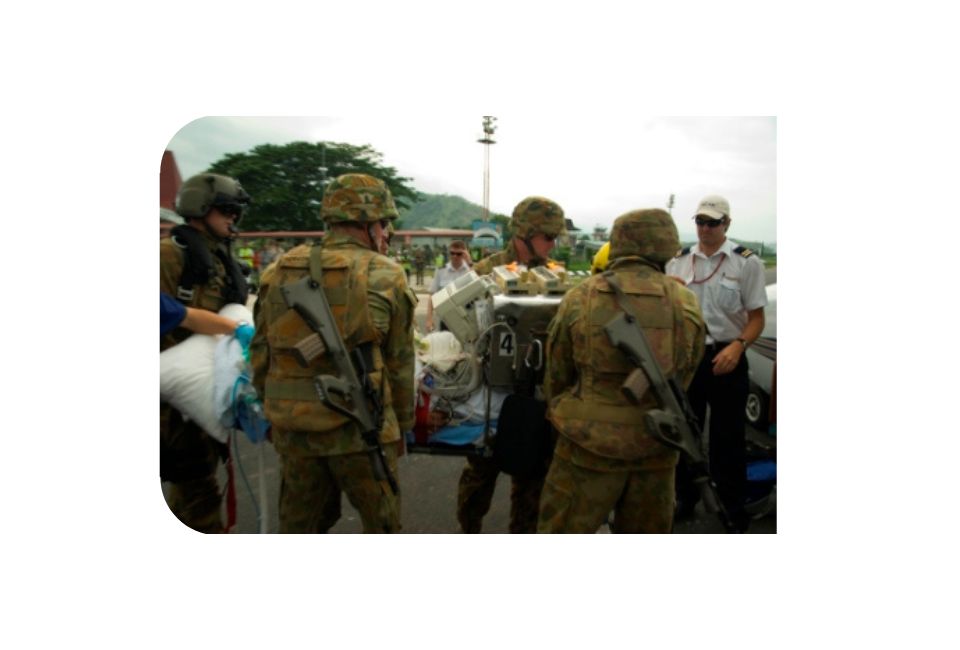
2008: Responding across borders
In early 2008, the Darwin service was in the international spotlight after an assassination attempt of East Timor’s President José Ramos Horta. He was flown from Dili to Darwin under full intensive care with the CareFlight jet service.
By year’s end, CareFlight was flying five international medevac missions every week – even staying online through Cyclone Helen.

8000+
Patients treated and transported in 2024-2025 in the Northern Territory

6,105
Our turbo-prop and helicopter fleets in the NT flew approximately 6,105 hours

3,090,891
Last year, our Top End crews flew approximately 3,090,891kms
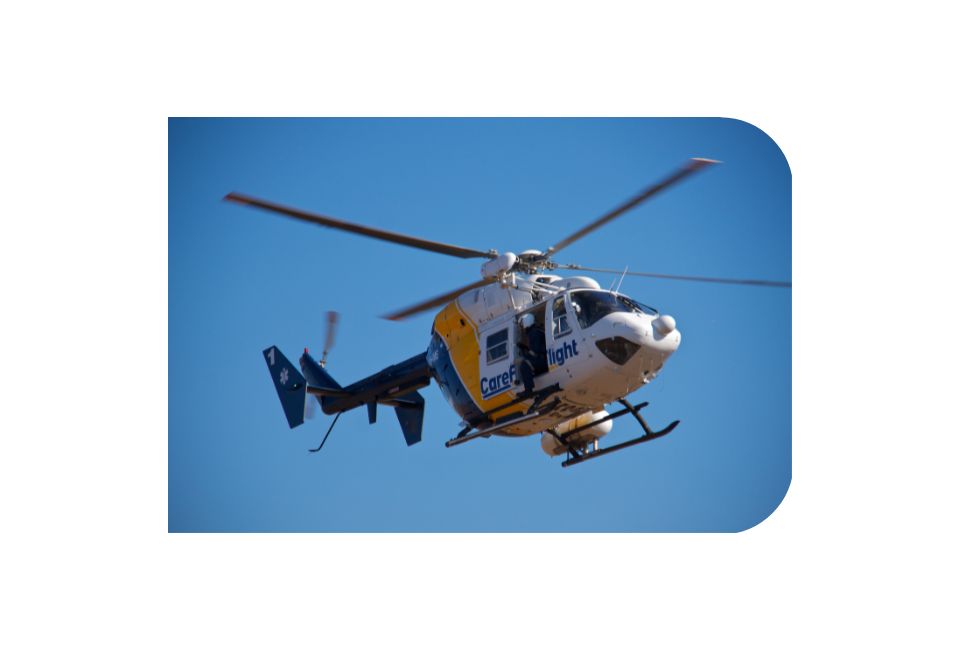
2009: New challenges across the Top End
Emergency medical retrievals out of Katherine were seriously disrupted due to a large number of wallabies on the runway at night. Making overnight fixed wing medical flights difficult.
CareFlight worked in partnership with the NT Government to find a solution which led to the implementation of the BK117 Rescue Helicopter making overnight retrievals possible. This was the first dedicated aeromedical helicopter in the Territory.
Later that year, a critically ill infant was flown from Katherine to Darwin Hospital on CareFlight’s first night‑vision medical mission — a defining moment in round‑the‑clock care in the NT.
2010: Expanding the Territory’s retrieval service
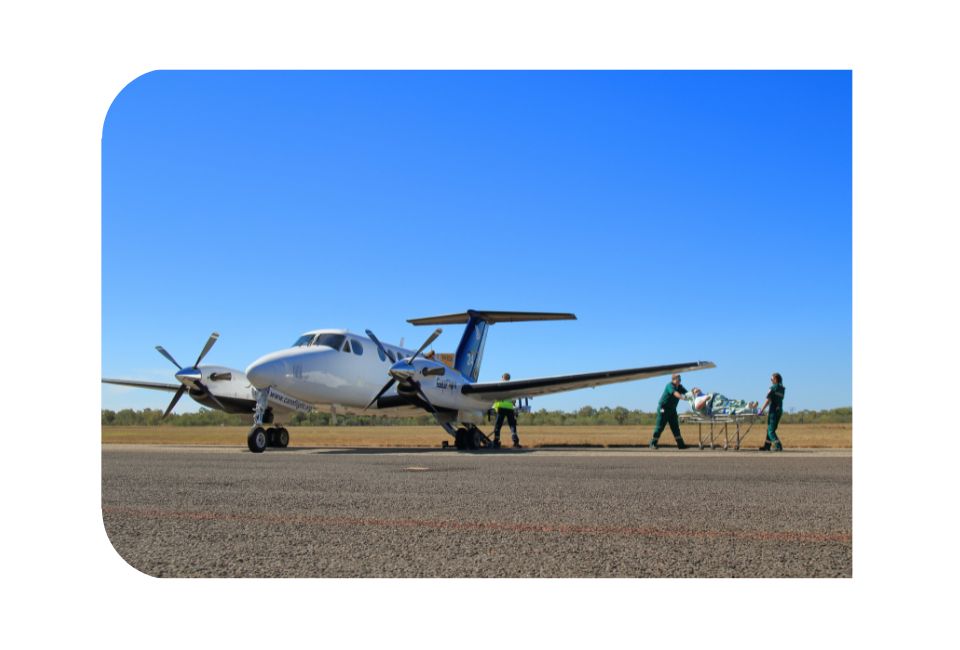
In 2010, fixed‑wing King Air ambulances began flying from our Darwin base, covering 600,000 square kilometres of the Top End.
CareFlight also earned certification to operate both fixed‑ and rotary‑wing aircraft under a single Air Operator Certificate.
2011: CareFlight wins the long-term Top End Medical Retrieval Service contract.
CareFlight won the long‑term NT Health contract and began transitioning into the Top End Medical Retrieval Service (TEMRS) — setting the foundation for modern aeromedical care across the Territory.
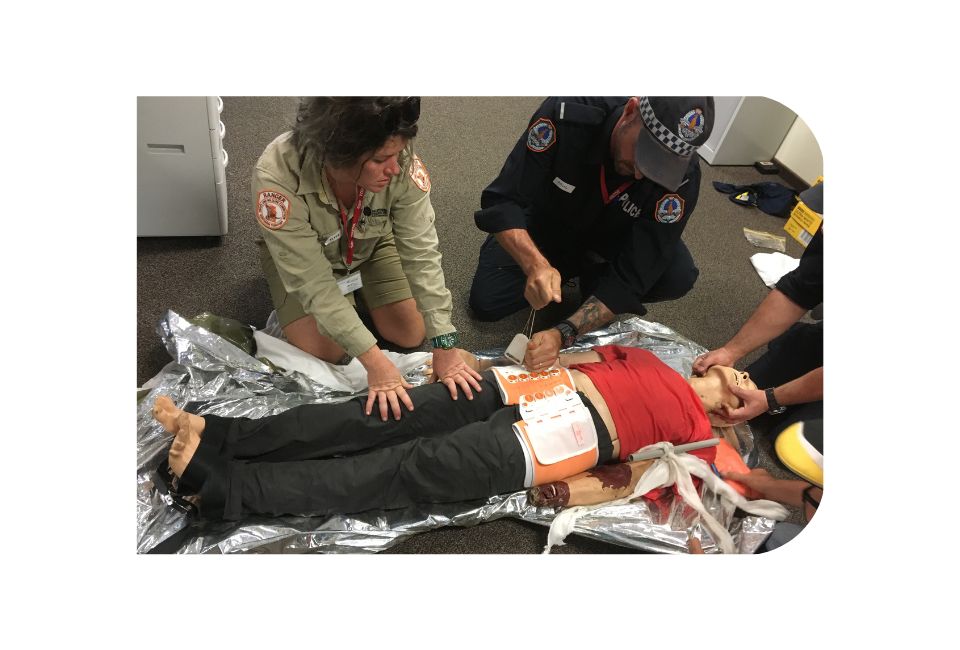
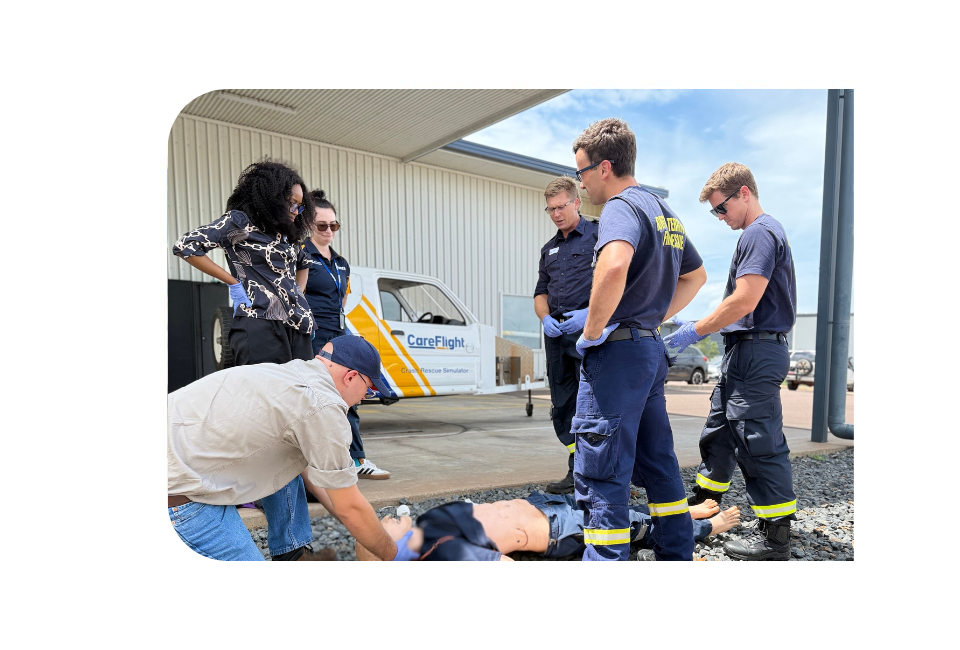
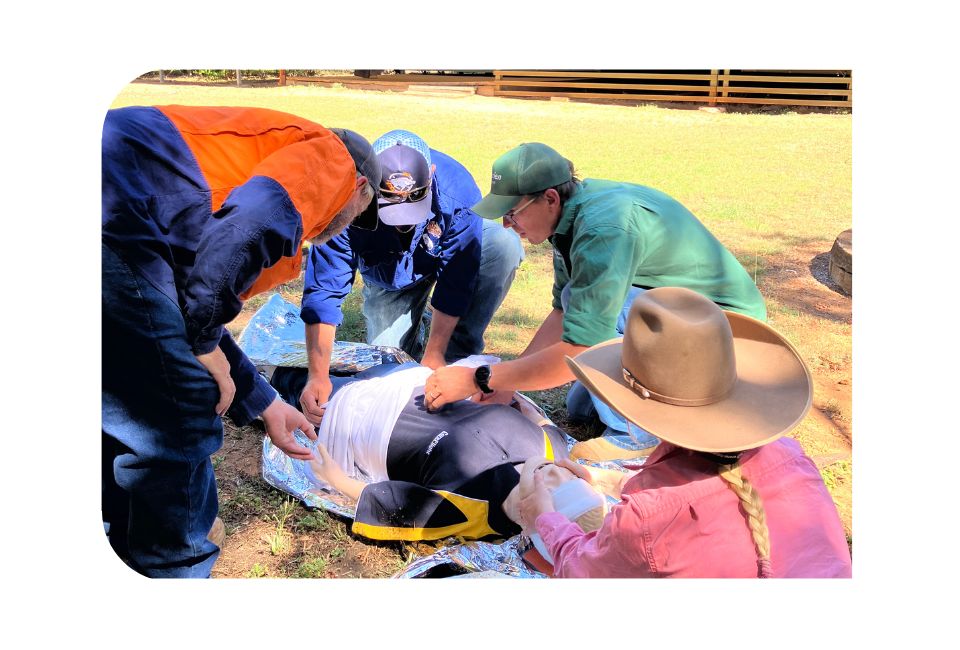
CareFlight launched the community education workshops program for local emergency services and volunteer personnel.
“I can’t thank CareFlight enough for the care they took of my precious husband and daughter. They made sure my family came back to me and I’ll never forget that,”
Jason's wife, Debra
2012: Saving lives in the most remote places
In 2012 we achieved the highest level of certification for Quality of Health Management Systems, ISO‑9001+ Core Health Standards.
This was also the year CareFlight responded when Warren became trapped beneath his overturned 4WD near Mataranka. The team performed emergency surgery right there, on the red dirt. Stabilised, Warren was flown to Ngukurr and then onto Royal Darwin Hospital. He had a full recovery.
2013: A new home and harrowing rescues
The new Darwin hangar is opened — the largest dedicated aeromedical facility in the nation.
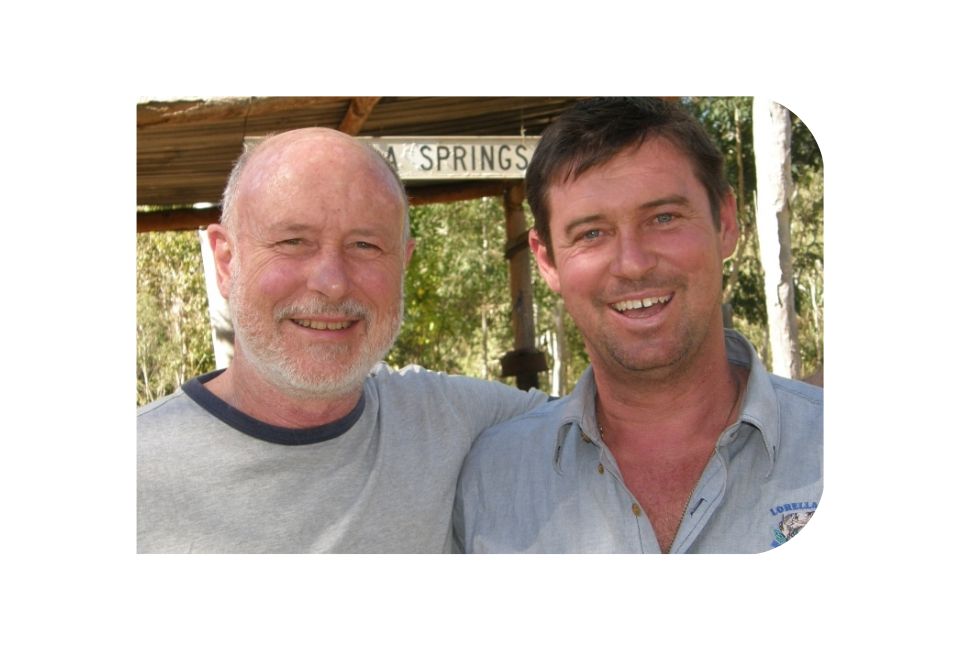
That same year, the team navigated flooded creeks and remote terrain to save Rhett, seriously injured when a grader tyre struck his vehicle. It took both helicopter and fixed‑wing aircraft to reach him due to the extremely remote location. After two weeks in hospital, Rhett made a full recovery.
2014: A more advanced fleet for more complex missions
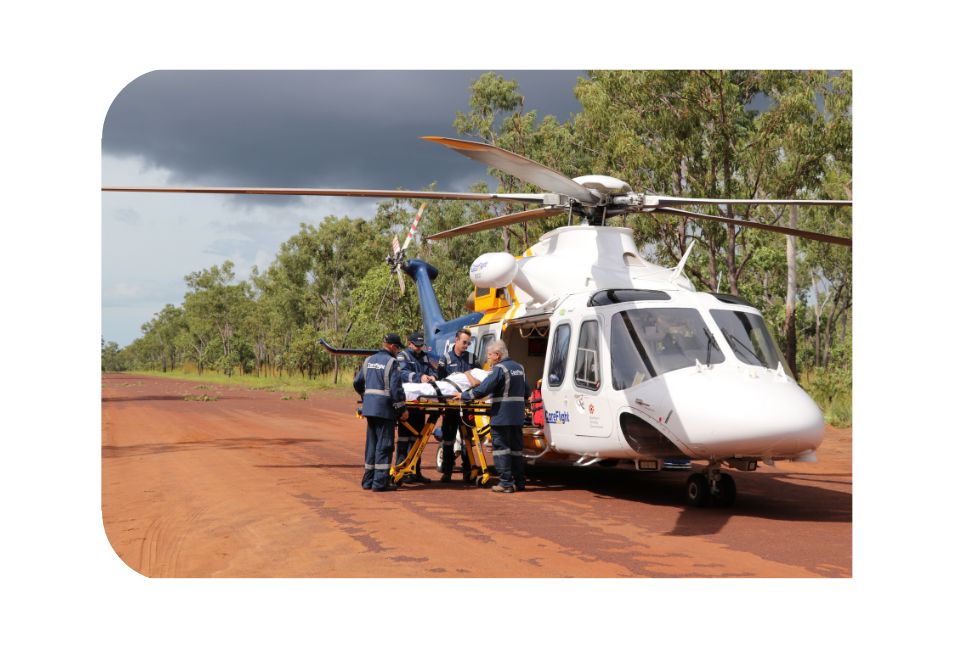
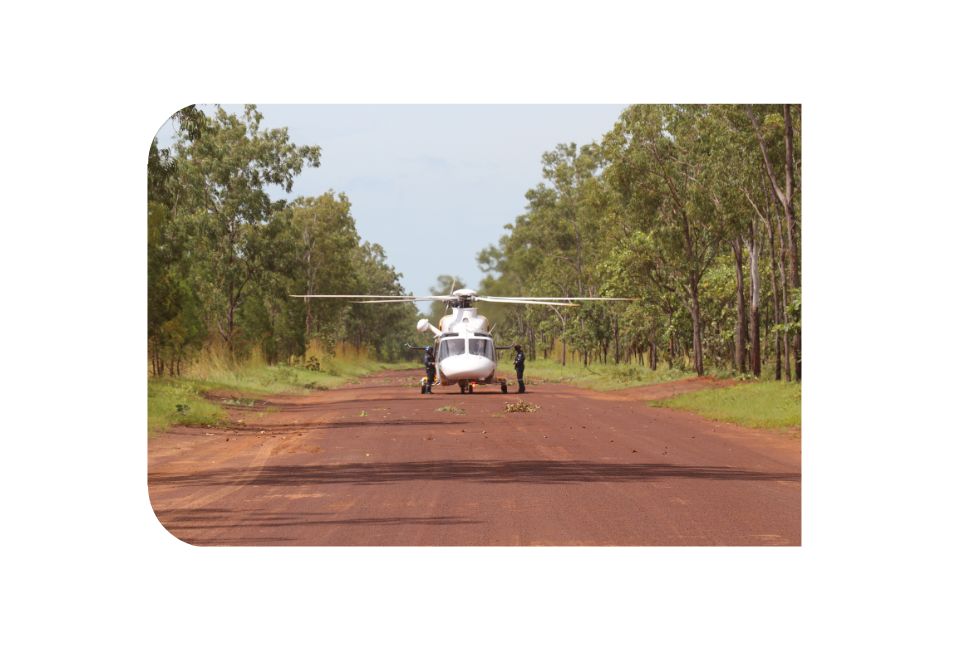
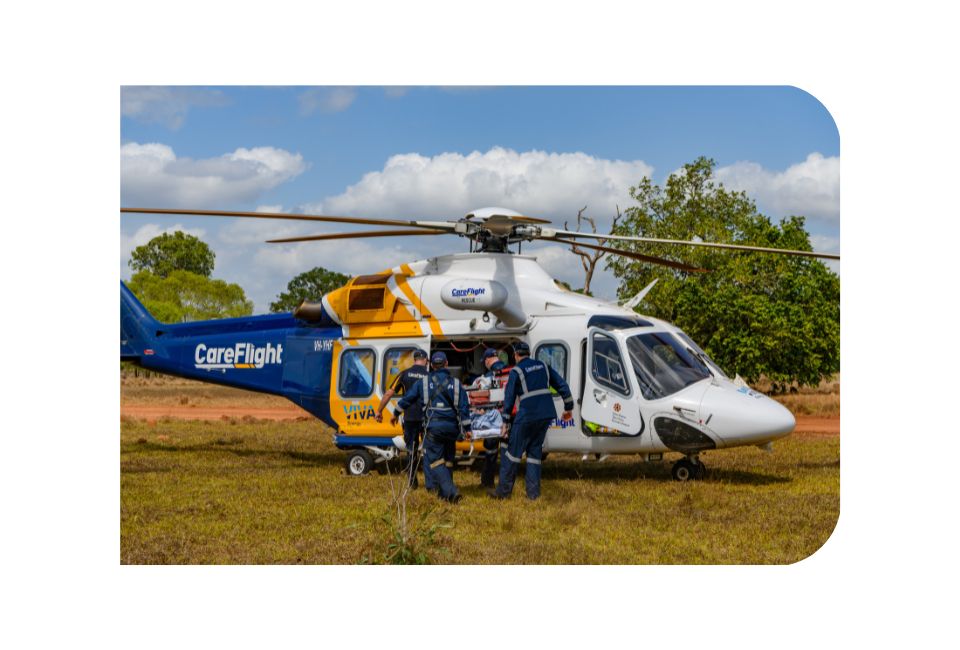
CareFlight acquires an AW139 Helicopter which becomes the dedicated NT Rescue Helicopter. The introduction of this helicopter gives CareFlight the ability to extend our services over vast distances and challenging terrain due to its high speed and long-range ability.
The AW139 can transport multiple patients and medical staff while also being capable to winching crew and patients in and out of challenging sites.
CareFlight secures the aeromedical support contract to INPEX off WA coast.
2015: Two new aeromedical jets join the fleet
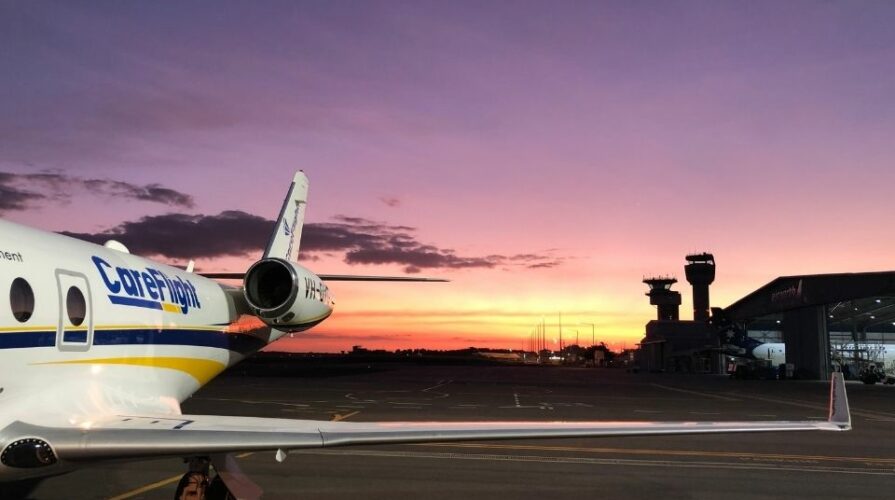
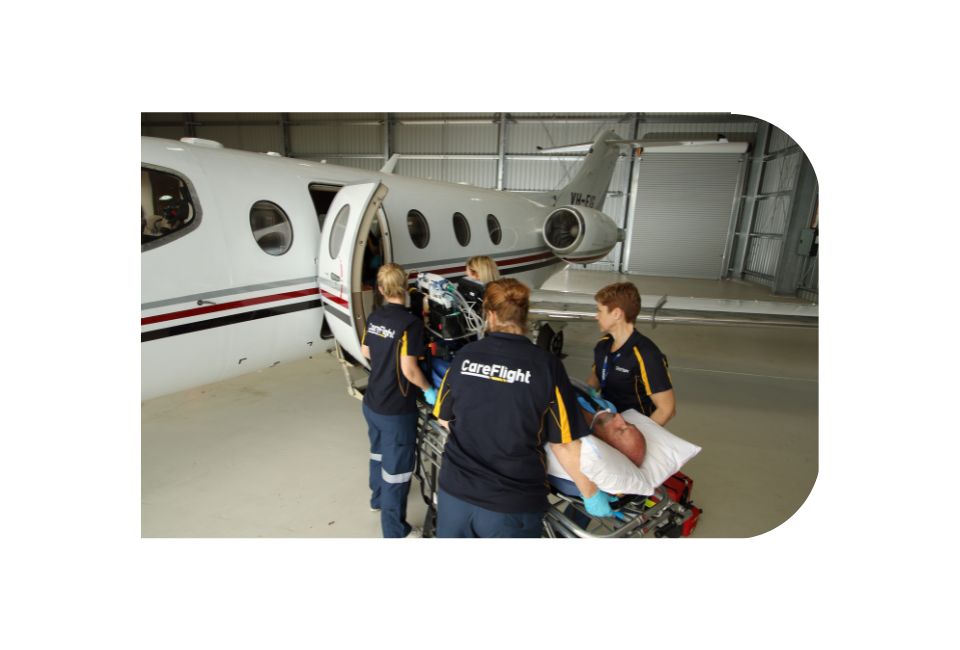
The year 2015 saw two new dedicated aeromedical jets join the fleet for CareFlight. Christmas Eve sees CareFlight’s first international mission on a CareFlight owned and operated jet. This brings our jet operations completely in-house, achieving the goal of providing a fully integrated aeromedical service.
2016: Multi-aircraft mission capability
When pilot Matt Gane crashed while mustering on Kiana Station, CareFlight launched a complex multi‑aircraft mission to reach him. Critically injured, Matt was flown to Darwin for lifesaving care before beginning months of rehabilitation.
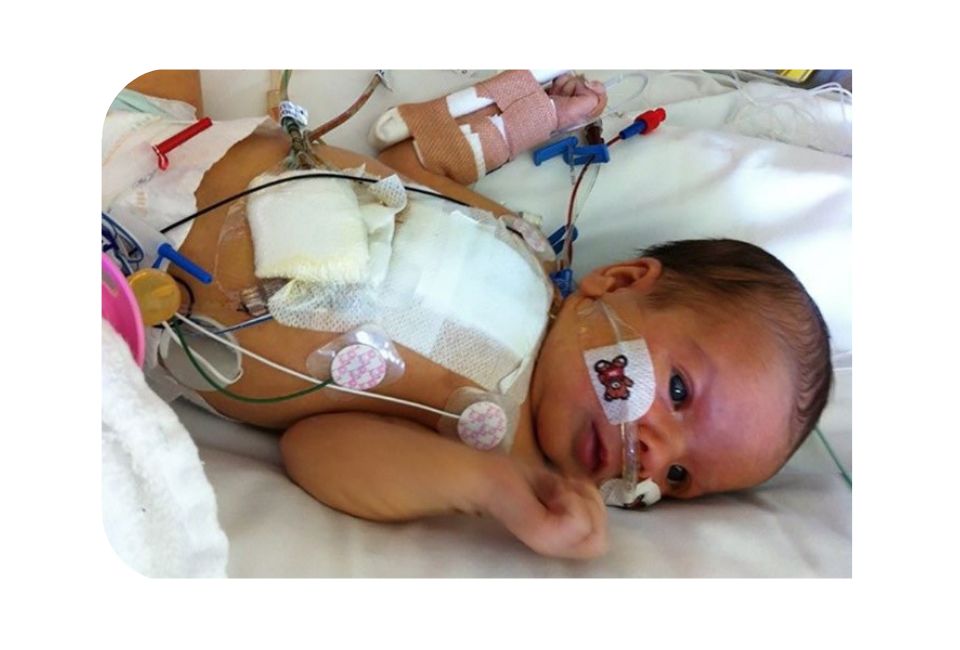
At just four days old, Alexis developed a life‑threatening condition. CareFlight flew her 3,130 km to Melbourne for urgent open‑heart surgery.
2017: Community, connection, and capability
In 2017 a second Darwin hangar was constructed to house a growing fleet of aircraft. This improved the team’s maintenance efficiency, ultimately improving the ability to deliver critical medical care to communities across the NT.
CareFlight launched its Reconciliation Action Plan in 2017, outlining our commitment to strengthening relationships with First Nations communities.
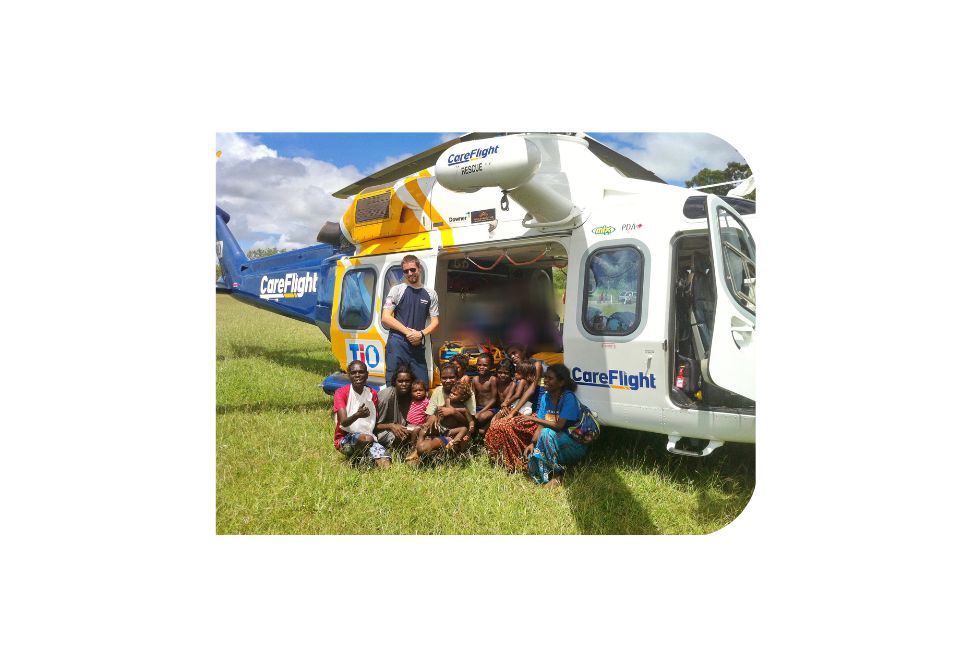
When the remote town of Bewswick was cut off after heavy rainfall and flood conditions, CareFlight were tasked with the mission of transporting patients to hospital. Like many missions with CareFlight the team were greeted to a joyful reception by the community.
Thousands of patients treated and transported each year in the NT
4212
Fixed wing patient retrievals last year

359
Interstate jet patient transfers last year
169
Rescue helicopter patient retrievals last year

3269
Road ambulance patient transfers last year
2018: CareFlight on the road
CareFlight initiated the Palmerston Interhospital Road Transport Service in NT to transport patients between Palmerston and Royal Darwin Hospitals.
CareFlight worked with INPEX to provide medical support and education at their Bladin Point Facility.
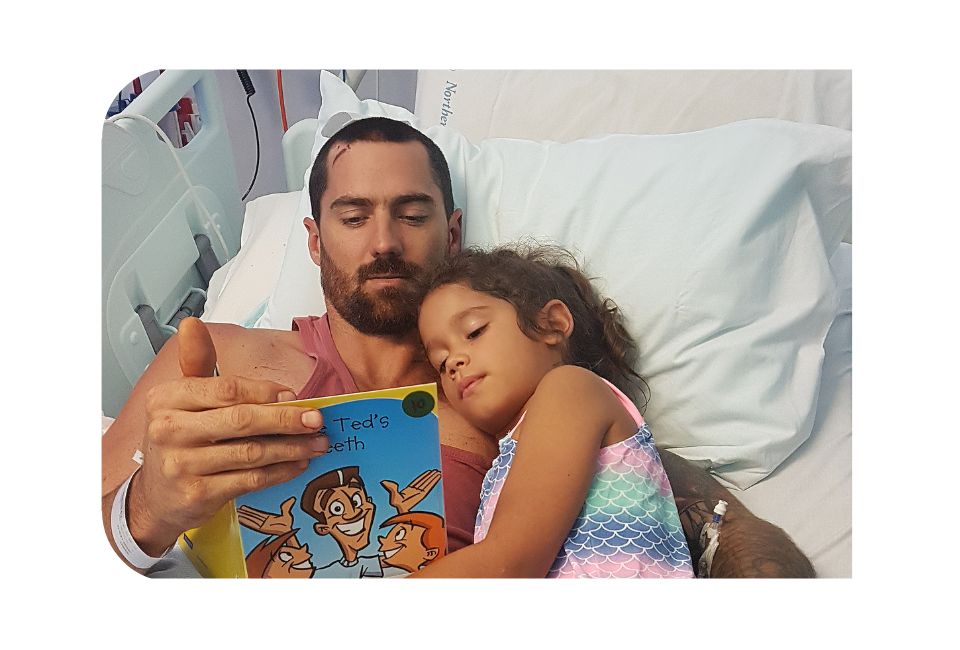
Jason and his six‑year‑old daughter Kia were injured in a rollover after swerving to avoid cattle in the remote Douglas Daly region. With storms delaying access and Jason suffering serious injuries, the Top End Medical Rescue Helicopter flew in, provided urgent care, and airlifted the pair to Royal Darwin Hospital.
2019: A new state-of-the-art jet
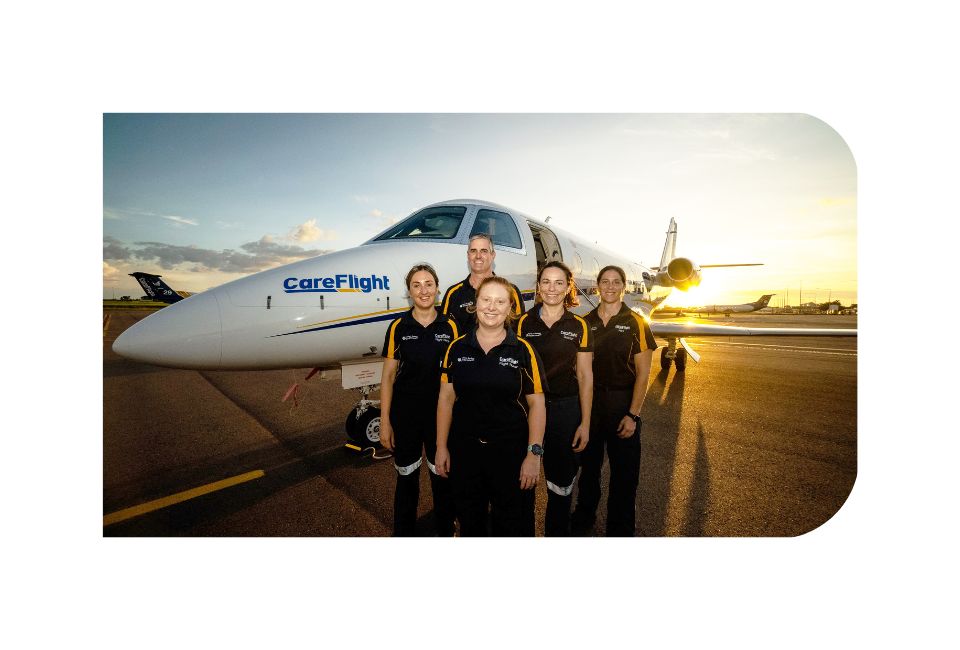
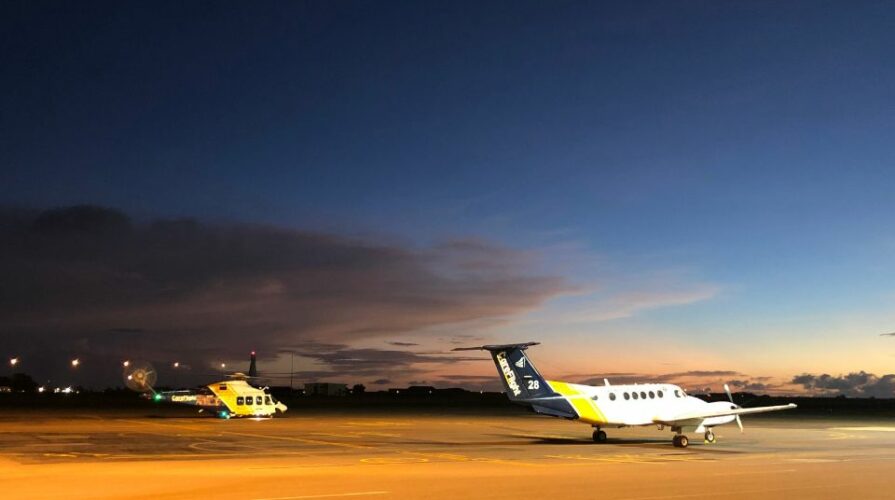
CareFlight acquires a new Gulfstream G150 jet, representing a new generation of aeromedical retrieval for the Northern Territory. A faster, longer range aircraft that can ensure patients can get specialist care interstate without delay.
Simon was critically injured in a rollover near Darwin and rescued by CareFlight’s Top End Rescue Helicopter. After being stabilised he was flown to Darwin and later transferred by CareFlight jet air ambulance to specialist spinal care in Sydney.
2020: A pandemic and a purpose
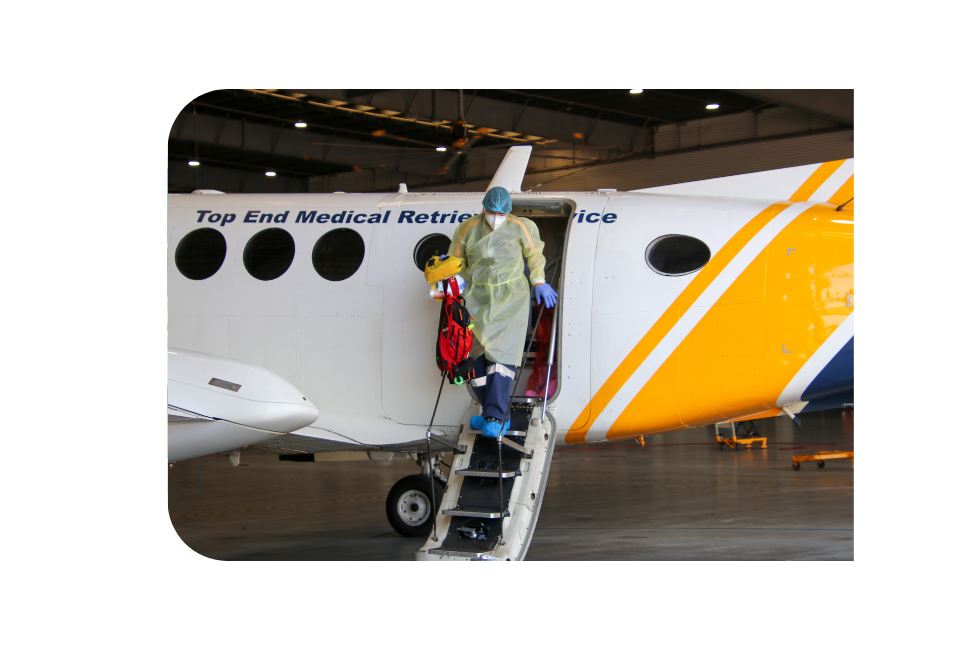
During the COVID‑19 pandemic, CareFlight continued to operate through one of the most challenging times to deliver healthcare in the nation’s history. Services in the NT were bolstered when the Australian Government provided funding to CareFlight as part of an aeromedical retrieval package to increase Australia’s capacity in response to the pandemic.
CareFlight launched second phase of our Reconciliation Action Plan, further advancing several initiatives, including a boost in Aboriginal and Torres Strait Islander staff numbers.
CareFlight was awarded an inter-hospital patient transport jet contract by NT Government and named as aeromedical evacuation services jet provider.
“One of the pilots met us at the hospital and introduced himself. He guaranteed that she would get to specialist care safely. I can’t tell you how much comfort that gave me."
Jess, Mother of baby Alexis
2021: Turning survival into strength
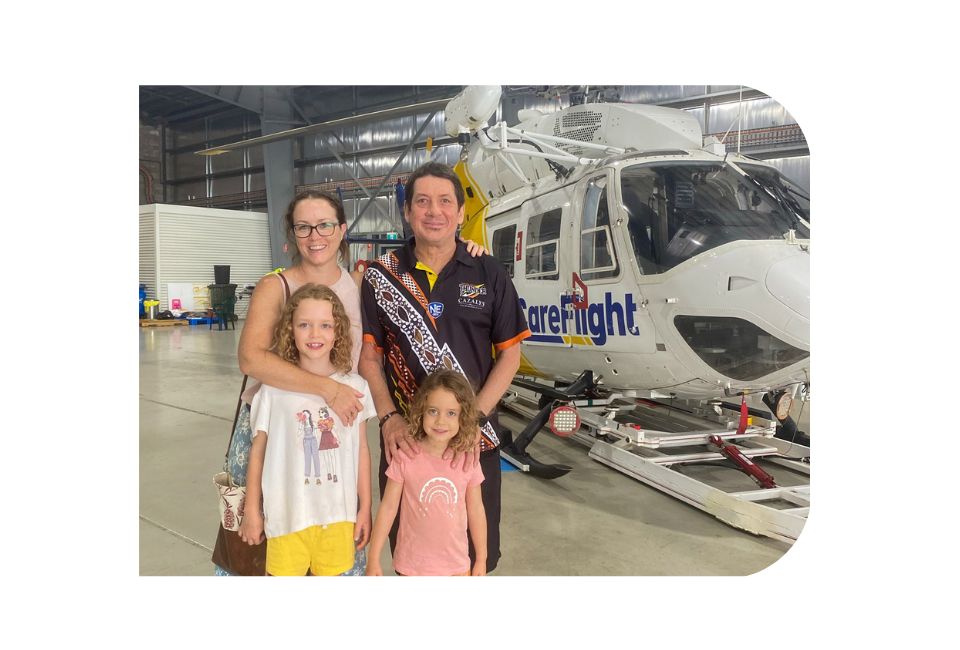
Darwin teacher Chris Garner suffers a sudden lung collapse, initially believing it to be an asthma attack. After emergency treatment at Royal Darwin Hospital, CareFlight transfers him to the Royal Adelaide Hospital for lifesaving specialist surgery. He spends over three months recovering across both cities and later joins CareFlight’s Territory Challenge, walking 180km to raise funds and share his story of survival.
2022: Viva Energy Australia partners with CareFlight
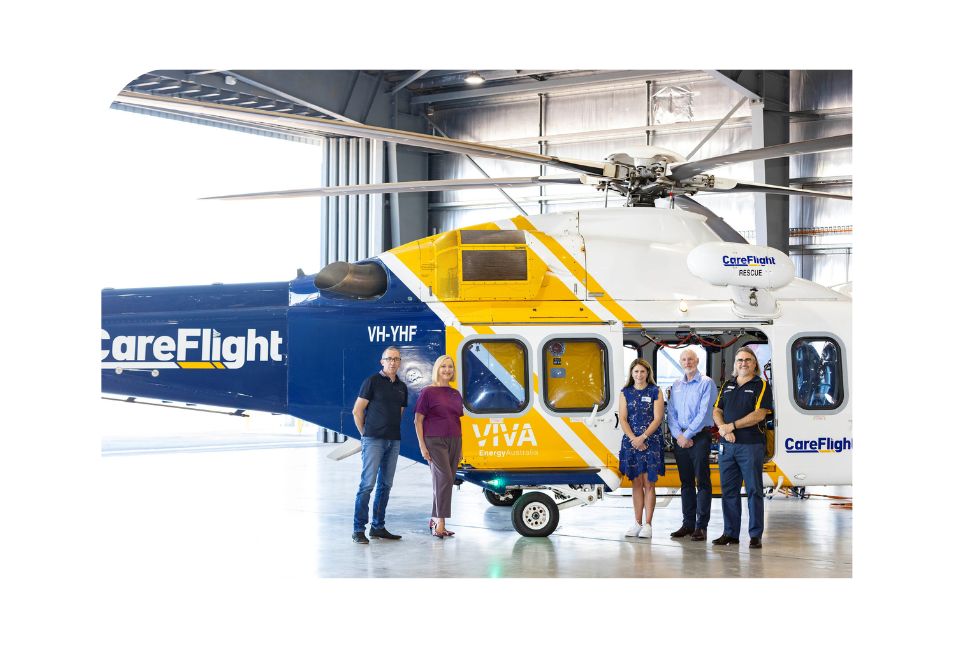
CareFlight launches our partnership with Viva Energy Australia as our naming rights partner for the CareFlight NT Rescue Helicopter. A $3 million commitment helps support the Darwin-based CareFlight medical rescue helicopter to continue to fly to the rescue and deliver emergency health care and retrieval across the Top End of the NT.
The partnership also funds programmes to develop pathways to employment for First Nations, rural and remote young people including dedicated traineeships and apprenticeships at CareFlight. Additionally, it provides funding to develop resources to communicate effectively in language the rights of CareFlight patients.
2023: Lifesaving power doubled
A second AW139 Rescue Helicopter and a second G150 Aeromedical Jet are purchased through funding by Federal Government. This provides support for CareFlight to play a key role in the saving of lives when responding to a major US Marine Osprey incident.
CareFlight and Charles Darwin University signed a Memorandum of Understanding (MoU) to allow for CDU health students to undertake clinical placements with CareFlight. This partnership strengthens NT workforce training, offering hands‑on experience in remote critical care and is a significant step to boosting the health workforce in the NT.
Our NT aeromedical fleet services an area of around 600,000 square kms.
2024: Expanding and educating
CareFlight Launches In-Language Program to improve communication for First Nations communities.
The second G150 aeromedical jet goes online.
CareFlight teams up with Nutrien Ag Solutions, providing lifesaving trauma training to agricultural communities Australia-wide including the NT.
Building upon the community education program, CareFlight successfully introduces the Infant Care Workshop (ICW) in alignment with our Sick and Injured Kids in the Bush (SIKITB) program. Where SIKITB is delivered to practitioners working in remote clinics, the ICWs are delivered to new parents and carers of infants in the community who are nominated by the clinics. The focus of our social purpose course delivery continues to be building resilience in communities.

2025: A future built on support
CareFlight secured Federal Government support, with a $10.1 million grant post year-end to acquire an additional aeromedical aircraft for the Northern Territory, supplementing the Top End fleet and boosting aircraft availability.
A Territory family reunited with the CareFlight crew who helped save their son Archie, 17 months after his emergency transfer. Born 14 weeks early on a remote cattle station, Archie was stabilised by a CareFlight team and flown to Adelaide for intensive care.
2026: A future built on people
CareFlight now transports over 8,000 patients a year in the Top End, flying millions of kilometres and logging many thousands of flight hours. The CareFlight Logistics Coordination Centre handles more than 200,000 calls per year.
As of 2026, CareFlight employs 221 staff in the NT, 96% being local residents in the Territory.